Posts

STEM Identity

Image
 I do not think my identity per se influenced my educational path. My age itself did, however. When I was younger I had no idea what I wanted to do with my life. I had no roles models that I was trying to emulate. With time and experience I realized that I loved helping people, and wanted a career relating to the medical field. I also am very curious about how things work. While pursuing other degree paths, I was finally led to Biology, my one true love. It has everything I want. My identity has impacted my sense of belonging though. I am twice the age of most of my fellow students. I feel like a bit of an outsider at times, and certainly way behind everyone else. When they are my current age, they will be masters of their field. I am already older than many of my professors. When I enter the workforce again, people much younger than I am will have much more knowledge and experience.  It is something I am having to get comfortable with. I also feel like I will have much less t...
ASU Week 1

 Do you feel you have a more malleable/growth mindset, or a fixed mindset?      I am not sure how to answer this. I am very fixed with some things, and malleable with others. I am not afraid to learn when it comes to things like science, although I can get particular about knowing all the rules or expectations, and sometimes get stuck. I can go to a foreign city, or in the middle of a jungle, and feel very comfortable in unfamiliar territory. If I am fixing a machine, I see it as a challenge and growth opportunity when I don't find the problem right away. In other areas I definitely have a fixed mindset. Language, for instance, has never been easy for me, and I resist learning. I took Spanish for 4 years and it did not "speak to me." I didn't like it at all. Now I hear people telling me how I need to learn Spanish and I get upset. I say things like, "There are 450 languages spoken in the U.S.. Am I to learn them all, or should everyone just learn English?" I...

Fall 14 Science Binge

Image
 I feel like I just binge watched the ending of several amazing shows. I loved everyone's  presentations. I have been anxious all semester to see the results of all these interesting  projects. There were several surprise endings, which I loved. They are all a good reminder of  how fragile and complex life is. I am off to ASU next semester, and I would like to thank all  of you for your support in helping me to get there. Thank you also for sharing your time and  knowledge, which has made my own life infinitely more interesting and fulfilling. Best  wishes, and may your journeys be spectacular.

Fall 13: Plants and Epigenetics

Image
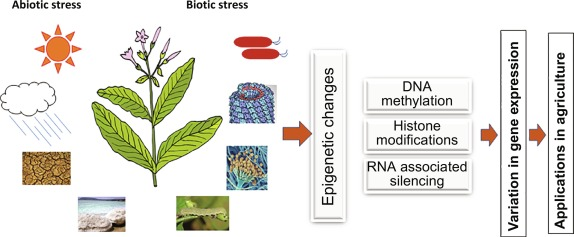
  Plants also have an epigenome. Like our own, theirs can be altered by climate and microbes. Gene expression is changed to adapt to available nutrients, water, sun, disease, helpful microbes (fungi, etc.), immediate plant population (over-crowding), and more. Because some plants have more than one type of reproductive cycle, the parts of the epigenome that are passed on may vary. In humans, only the mothers epigenome is passed on. In plants, they may pass on both sets, depending on reproduction type. These changes can affect short term survival, long term survival of one plant, or long term survival of a population of plants. Understanding these processes could greatly impact our ability to grow healthy plants in a sustainable fashion. Here is an interesting article for more information: https://www.mdpi.com/1422-0067/21/20/7457/htm. 

Fall 12 Epigenetics and cancer

Image
  Some cancers are believed to be caused via epigenetic mutations.  Cancer stem  cells, "CSC's", can be made and maintained through  the  epigenome  via altered histones and  methylations. This  reprogramming of cell  production changes not  only what type of  cell  is being made, the  gene  expression, but how  rapidly. Scientists  are  still working on  ways  to restore the epigenome  of these cells as a  way  to fight  cancers,  such as leukemia. 

Fall 11 Epigenetics and aquatic life

Image
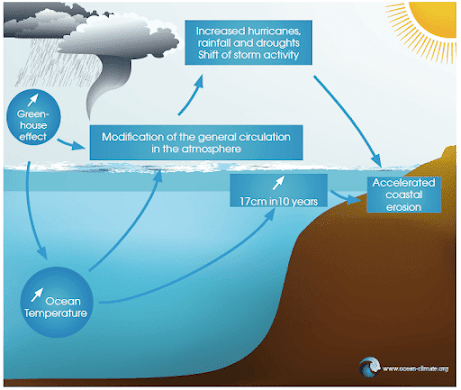
 Epigenetics influences more than just humans. Aquatic life also have their own epigenome. The microbes, fish, mammals, etc. all rely on a healthy epigenome to regulate their cells. Like ours, aquatic life's epigenome can be altered by their environment.  One factor is their surrounding temperature, which is being impacted by overall climate change. As ocean temperatures change, the organisms epigenome can be altered.  Another factor is pollution. Toxic chemicals from oil spills, discarded medications, or microplastics can change the epigenome. This in turn affects their ability to function, survive, and procreate, devastating microbial populations.  Why is this important?  Much of the worlds oxygen is produced from microbes in the water. Greenhouse gases are partially regulated by these microbes.  Changes in epigenome can affect microbial populations and their ability to function. Fewer microbes means less oxygen and more greenhouse gases. Fewer micro...

Fall 10 Epigenetics and Forensics

Image
 I am not an expert. This is by no means a perfect example of methodologies, but rather a fake scenario to provide a basic idea of how epigenetics can possibly help solve crimes: Lets say a forensic specialist is working a case in Arizona about a suspected serial killer. The police have followed evidence to a residence with two suspects who live together, but they are identical twin brothers. Who is our killer?  We find a kitchen knife with three sets of DNA on it. Both twins use the knife at home for cooking. Having the same DNA, how would you know which brother the killer is, and who is our 3rd person? Epigenetics offers many solutions to help identify suspects as well as victims. Fluid identification: Epigenetics can identify what type of fluid the DNA came from, such as blood, semen, vaginal, sweat, or saliva. Through examining the epigenetic methylation profiles, we can tell that much of the DNA from the knife came from male sweat, which we would expect on the kitchen kni...